



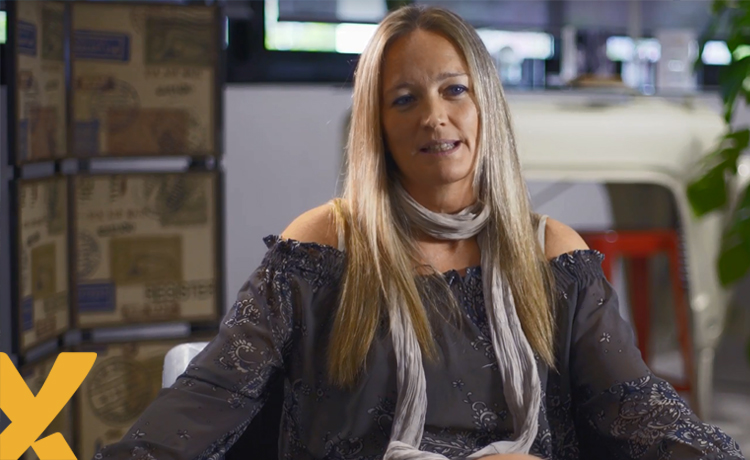
Meeting with Rosa González, CFO and BDM of the Audax Group
Q. Audax Italia has grown a lot and quickly: in 4 years it has gone from 5 to 65 million euros in turnover. What is, then, the macro objective for 2018?
For Audax, the main objective is to adapt the structure to the work volumes and ongoing activities so as to improve internal flows and increase external active services. In this sense, we are not looking for an increase in the number of customers, which, on the contrary, we would like to keep stable compared to the 2017 numbers, but a more marked customer loyalty.
Q. And if we look a little further ahead, to the next few years?
One of the most ambitious medium-long term projects is the improvement of tariffs, with diversified offers, more economically advantageous and, therefore, more attractive for families and businesses. However, we know that to achieve this result we need to be able to buy or obtain energy at lower prices. In Spain, where our presence is stronger and more rooted, this already happens in two ways. First, thanks to agreements signed directly with producers, as shown by the PPA contract, or Power Purchase Agreement , signed in May. Second, by exploiting the production of renewable energy from wind and photovoltaic parks owned by us, such as those scattered across the Iberian Peninsula, in France, in Poland and in Panama. We are working to make all this happen in Italy too. 4 years after opening in your country we can say that we have the characteristics and numbers to do it: we are a bankable Group, qualified as Investment Grade with a triple B negative rating with a stable trend.
Q. You mentioned Spain. What differences did you find with the Iberian market?
The most obvious, in my opinion, is the different maturity of the Spanish electricity market, whose liberalization dates back to 1997, while here in Italy it has yet to be implemented. An essential factor when you want to make a comparison between the two nations. Furthermore, the price of energy, due to Italy's dependence on foreign supplies and the absence of nuclear power, is among the most expensive in Europe and at least 10€/mw more expensive than the Spanish one.
Q. What about the action of Audax? Were there different approaches?
Audax Energia's action in Spain is focused more on the business-enterprise side and less on the private-family side. A choice that entails the advantage of having to manage a smaller number of subjects, individually more profitable and generally more "loyal". But Iberian customer loyalty, more solid than the Italian one, derives from at least two factors, namely the normal tendency of a company to maintain the same energy supplier for a prolonged period of time and from a different regulatory framework, with rules that make the transition from one manager to another, the so-called switch-out, a little less simple. Furthermore, there is an irreducible chronological factor. Audax Energía was born first and the resulting greater experience accumulated has allowed it to better understand market dynamics and mechanisms, essential elements for refining and focusing the offer.
Q. How does the competition react in Spain?
In our country, the number of strong players operating in the energy market is clearly decreasing, with a tendency towards conglomeration. A favorable element, considering that Audax Energía, positioning itself among the top ten players in Spain – and specifically in seventh position – can afford greater room for maneuver when it comes to proposing new solutions and offers.
Q. Looking back, when you arrived in Italy, what was the most difficult to understand and manage?
I remember an approach that was free from prejudice from the very beginning. The Audax Group invested in your country because it considered Italy a potentially important market both in terms of size and because it was not yet as mature as other nations in Europe. However, this did not automatically make things simple; we had to change paradigm and adapt to the Italian reality dominated by one or two very strong players holding almost all of the energy sold, in contrast to a galaxy of medium-small entities that divide up the remaining share. A market that for a significant percentage is not yet liberalized - and will not be until July 2020 - and where a different regulatory framework is active compared to the Spanish one.
D. Different rules, especially in terms of work...
In fact, the legislation that regulates employment relationships – especially hiring and possible termination of a professional relationship – has been one of the most felt elements of difference between our two countries. The same can be said for the different way of conceiving flexibility between employers and collaborators. Furthermore, we have had to deal with entities that are partly new to us, such as intermediation agencies that – we now know – play a significant role in the field of energy sales in Italy. Establishing a profitable relationship for potential returns in terms of new customers and fair for contractual conditions has been essential to be able to carry out our business in the best possible way.